
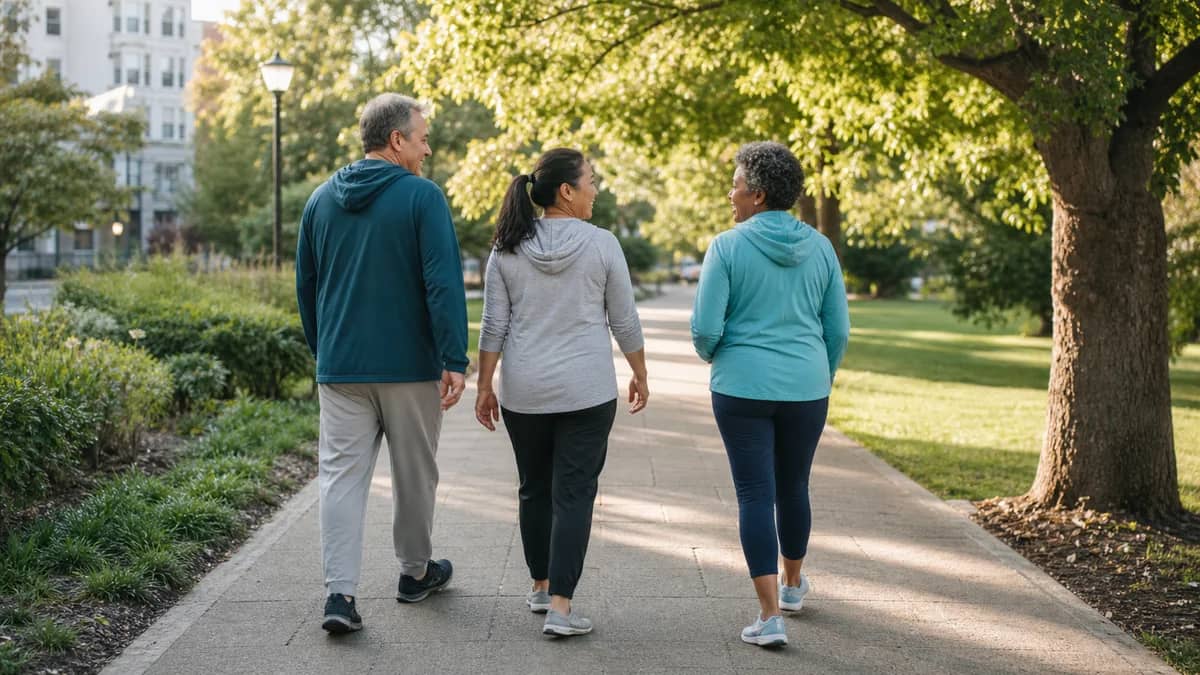
Walking is simple, but a walking habit still needs design. The goal is not to prove how far you can go on the first day. It is to create a version you can repeat, then let time and distance grow gradually.
Begin below your maximum
Choose a starting walk that feels almost too easy—perhaps five or ten minutes. Finish feeling that you could have continued. This makes soreness and dread less likely and gives you a reliable baseline. Any amount of moderate-to-vigorous activity can provide some benefit, according to the U.S. Centers for Disease Control and Prevention.
Attach the walk to a dependable cue
After breakfast or lunch.
Immediately after finishing work.
After taking children to school.
Before an evening shower.
During a regular phone call with a friend or family member.
A cue is more dependable than waiting to feel motivated. Prepare shoes, weather-appropriate clothing, and any visibility gear in advance. If the environment is very hot, cold, polluted, dark, or unsafe, use an indoor corridor, shopping centre, treadmill, or another suitable space.
Use the talk test
For a moderate walk, many people can talk but not sing comfortably. Beginners do not need to walk briskly every time. Easy walks build the routine; gradually faster periods can be added later. Stop and seek help for warning signs such as chest pain, faintness, or unusual severe shortness of breath.
Progress one thing at a time
First, make the starting walk repeatable for one or two weeks.
Then add a few minutes to selected walks.
When duration feels comfortable, add short brisk sections.
Only then consider extra hills, longer routes, or more frequent days.

Keep reading
A Beginner's Guide to Safe Strength Training at Home
Changing duration, speed, hills, and frequency at once makes it difficult to know what caused fatigue or pain. Small increases are easier to evaluate and maintain.
Create a bad-weather version
Decide now what counts on a difficult day. It might be ten minutes indoors, three five-minute walks, or a short mobility session. The backup version protects the identity of the habit without requiring unsafe outdoor conditions or a heroic effort.
Track consistency, not perfection
A simple calendar mark is enough. Record that the walk happened, and optionally note minutes and how it felt. Step counts can be useful but are not a universal prescription. Your starting point, health, age, work, and environment matter more than a round number borrowed from someone else.
The best walking plan is one with a small version for busy days and room to grow on good days.
A four-week starter pattern
Week 1: three easy walks of 5–10 minutes.
Week 2: repeat, adding a few minutes if recovery is comfortable.
Week 3: include two or three brief brisk sections in one walk.
Week 4: keep what worked and add only one small challenge.
Make it useful to your life
Walking can be transport, social time, a thinking break, or exercise. A habit becomes stronger when it solves more than one problem. Pick up a small errand, call someone, explore a nearby route, or walk after a meal. Useful movement is easier to protect than movement that feels like punishment.
Reference notes
Sources and further reading
Our editorial promise
Prepared with clarity and care.
This guide completed our editorial review before publishing. If something needs attention, report a correction or contact the publisher.
About this article
- Published:
- Last updated:
- Author:
- Ceyora Editorial Team
- Review status:
- Editorially reviewed
- Sources:
- 2
- Corrections:
- Report an issue