

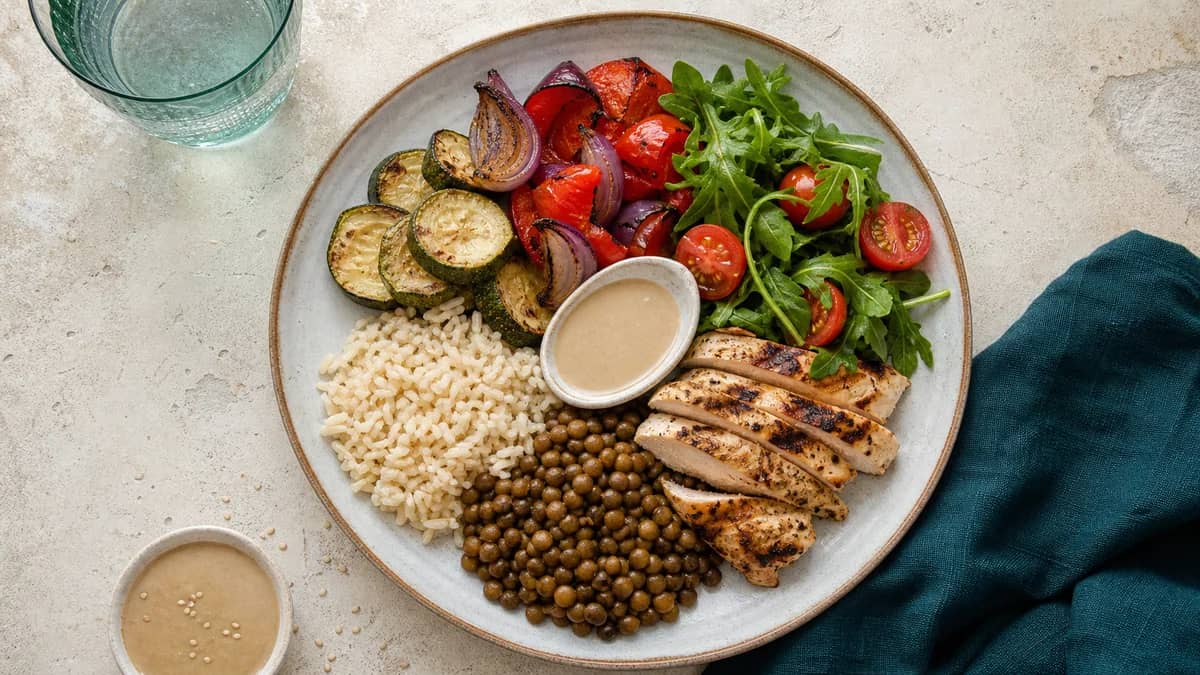
Balanced eating does not have to begin with an app, a scale, or a perfect set of numbers. A visual plate method gives you a practical starting point: build most meals from several food groups, use portions that satisfy you, and adjust the pattern to your culture, budget, appetite, and health needs.
The useful question is not “Was this meal perfect?” It is “What could I add to make this meal more complete and satisfying?”
Start with four useful parts
Imagine your plate as four flexible jobs rather than rigid percentages. Vegetables or fruit provide variety and fibre. Protein supports growth, repair, and fullness. Carbohydrate foods provide accessible energy. A modest source of fat adds flavour and can help a meal feel satisfying. Some foods do more than one job, so there is no need to classify every ingredient perfectly.
Vegetables or fruit: leafy greens, tomatoes, carrots, frozen mixed vegetables, berries, apples, or seasonal produce.
Protein: beans, lentils, eggs, fish, chicken, tofu, yogurt, nuts, or other foods that fit your preferences.
Satisfying carbohydrates: rice, bread, oats, potatoes, pasta, corn, or other grains and starchy vegetables.
Fats and flavour: olive oil, avocado, nuts, seeds, tahini, or the fat naturally present in foods.
Use the add-before-you-remove rule
Many everyday meals already contain one or two useful parts. Instead of rebuilding them from zero, identify what is missing. Toast can become a fuller breakfast with eggs or yogurt and fruit. Rice and curry may need an extra vegetable or a clearer protein source. Noodles can be strengthened with tofu, egg, chicken, and frozen vegetables. This approach is usually easier to sustain than a long list of forbidden foods.

Keep reading
Iron-Rich Foods That Actually Support Healthy Energy Levels
Let hunger and context shape the portion
A plate is a guide, not a prescription. Your appetite may be larger after exercise and smaller on a quiet day. A child, an older adult, a pregnant person, and a competitive athlete will not need identical portions. Begin with a reasonable serving, eat without rushing when possible, and notice whether you feel comfortably satisfied. You can always add more.
Make convenience part of the plan
Balanced meals do not require cooking everything from scratch. Frozen vegetables, canned beans, tinned fish, microwave grains, pre-washed salad, plain yogurt, and rotisserie chicken can all reduce the work. When choosing packaged foods, compare labels when practical and look for options that are lower in added sugar, sodium, or saturated fat—but do not let label comparison become a barrier to eating.
Five quick combinations
Oats with yogurt, fruit, and nuts or seeds.
Rice with lentil curry, two vegetables, and a spoon of yogurt.
Whole-grain toast with eggs, tomatoes, and fruit.
A grain bowl with beans, roasted or frozen vegetables, and tahini dressing.
Pasta with tomato sauce, vegetables, and tuna, chicken, beans, or tofu.
What matters across the week
One meal cannot define the quality of your whole diet. Look for variety across days: different colours of produce, a mix of plant and animal proteins if you eat both, whole grains when available, and room for foods chosen simply for enjoyment. The World Health Organization describes adequacy, balance, moderation, and diversity as core principles of healthy diets. A flexible plate method turns those principles into something you can use at lunch today.
Reference notes
Sources and further reading
Our editorial promise
Prepared with clarity and care.
This guide completed our editorial review before publishing. If something needs attention, report a correction or contact the publisher.
About this article
- Published:
- Last updated:
- Author:
- Ceyora Editorial Team
- Review status:
- Editorially reviewed
- Sources:
- 2
- Corrections:
- Report an issue